




Creatine
What is creatine?
Creatine is a substance that the body produces naturally from amino acids and is primarily stored in the muscles. It can also be obtained through diet, especially from foods like meat and fish.
Its main function is to help the body produce energy quickly during intense, short-duration efforts. This makes it especially relevant in activities related to strength, power, and physical performance.
Benefits of creatine
Among the most notable benefits are:
- Improved physical performance: increases performance in high-intensity, short-duration exercises.
- Support in the development of muscle mass: It can contribute to promoting gains in muscle mass.
- Improved recovery between intense efforts: it is a support during demanding training programs.
- Increased energy availability: regenerates ATP (adenosine triphosphate), one of the main sources of cellular energy.
Types of creatine
- Creatine monohydrate: This is the most well-known and scientifically studied form. It is usually the most commonly used option.
- Micronized creatine: It has smaller particles to facilitate its dissolution.
- Creatine HCl (hydrochloride): Some formulas seek to improve solubility.
- Buffered creatine: Designed to modify certain characteristics related to absorption.
Frequently Asked Questions
Is creatine suitable for women?
Yes. Its use is not limited to a specific gender and can be used within programs adapted to each objective.
Should it be taken every day?
It is generally recommended to maintain a constant intake to maintain muscle levels.
Is it better to take it before or after training?
Regularity is usually more important than the exact moment.
Does creatine replace a good diet?
No. Supplements are not a substitute for a varied diet and healthy habits.
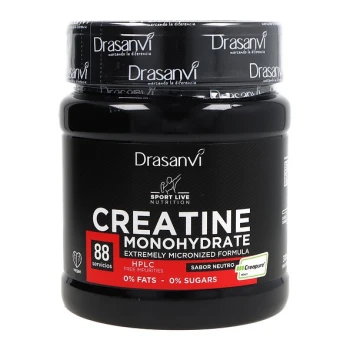
If you're a demanding athlete seeking the ultimate in supplementation, Drasanvi's Creapure® Creatine Monohydrate in its 300-gram format is the perfect..
23.50€
Ex Tax:23.50€
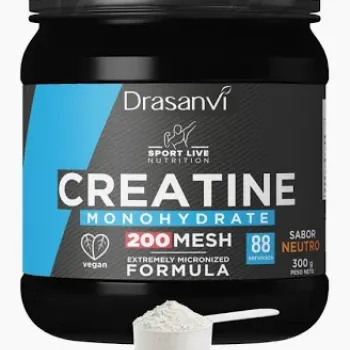
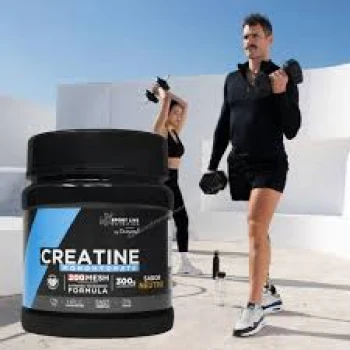
If you're looking to boost your athletic performance, build muscle mass, and accelerate recovery after intense workouts, Drasanvi's Creatine Sport Liv..
17.50€
Ex Tax:17.50€
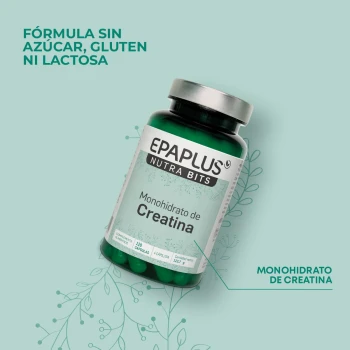
Creatine monohydrate in vegetable capsules, sugar-free, gluten-free, and lactose-free. Just 4 capsules a day provide 3g of creatine to enhance perform..
21.00€
Ex Tax:21.00€
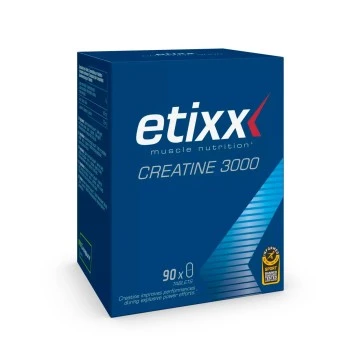
Ideal supplement to support athletes who mainly participate in power sports and sports with intermittent sprints (that is, team sports such as footbal..
33.95€
Ex Tax:33.95€
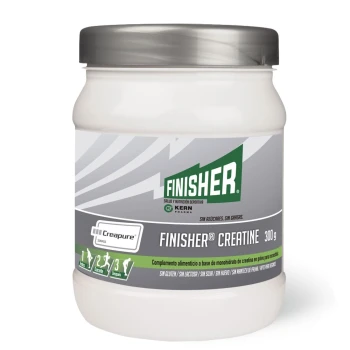
-14%
Finisher® Creatine is a dietary supplement composed primarily of creatine monohydrate . Its main function is to serve as an immediate source of energy..
25.90€ 30.00€
Ex Tax:25.90€
Showing 1 to 5 of 5 (1 Pages)